.svg)

Youth Engagement Playbook
A practical guide to building stronger, more meaningful connections with young people and creating opportunities for their ideas, voices and experiences to shape the future.


Six practices that run through every stage.
Stages are when. Practices are how. Click any practice to see what it means and what it looks like in the real world.
Pathways & Progression
Young people can see a next step and a way to reach it. Progression is what turns a short opportunity into a career, and its absence is the most common reason good people leave.
Clear role ladders
Fellowships and scholarships
Career mentorship programs
Networking opportunities
Portfolio building projects
Incentives & Support
Young people are paid, credited, and supported for what they contribute. Recognition is not only financial, but it has to be real, and it has to arrive without being chased.
Award-wage roles
Honorariums and stipends
Reference letters or certificates
Recognition in publications
Wellness support including travel
Design
Young people shape the thing itself, not just the feedback on it. Design is the difference between consulting people about a decision and letting them make it.
Co-design workshops
Creative labs and hackathons
Prototypes and mockups
Training & Learning
Young people build skills they can carry somewhere else. The most valued learning is rarely formal, and often comes from sitting beside someone doing the work.
Skill-building workshops
Peer-to-peer mentoring
Shadowing opportunities
Communication
Young people hear from you in a way that sounds like a person. Communication is the practice most often written for funders and most often read by young people.
Social media campaigns
Open forums and feedback channels
Participation & Decision Making
Young people hold influence over decisions that affect them. This is the practice members returned to most: hand over real power and most other engagement problems get easier.
Advisory groups and steering committees
Participatory voting and budgeting
Co-creation sessions
Role rotation and shared leadership
Six stages. Click one.
The toolkit follows the whole journey a young person takes through an organisation. The circle closes because the people who leave well are the ones who bring the next group to you.
Click one.
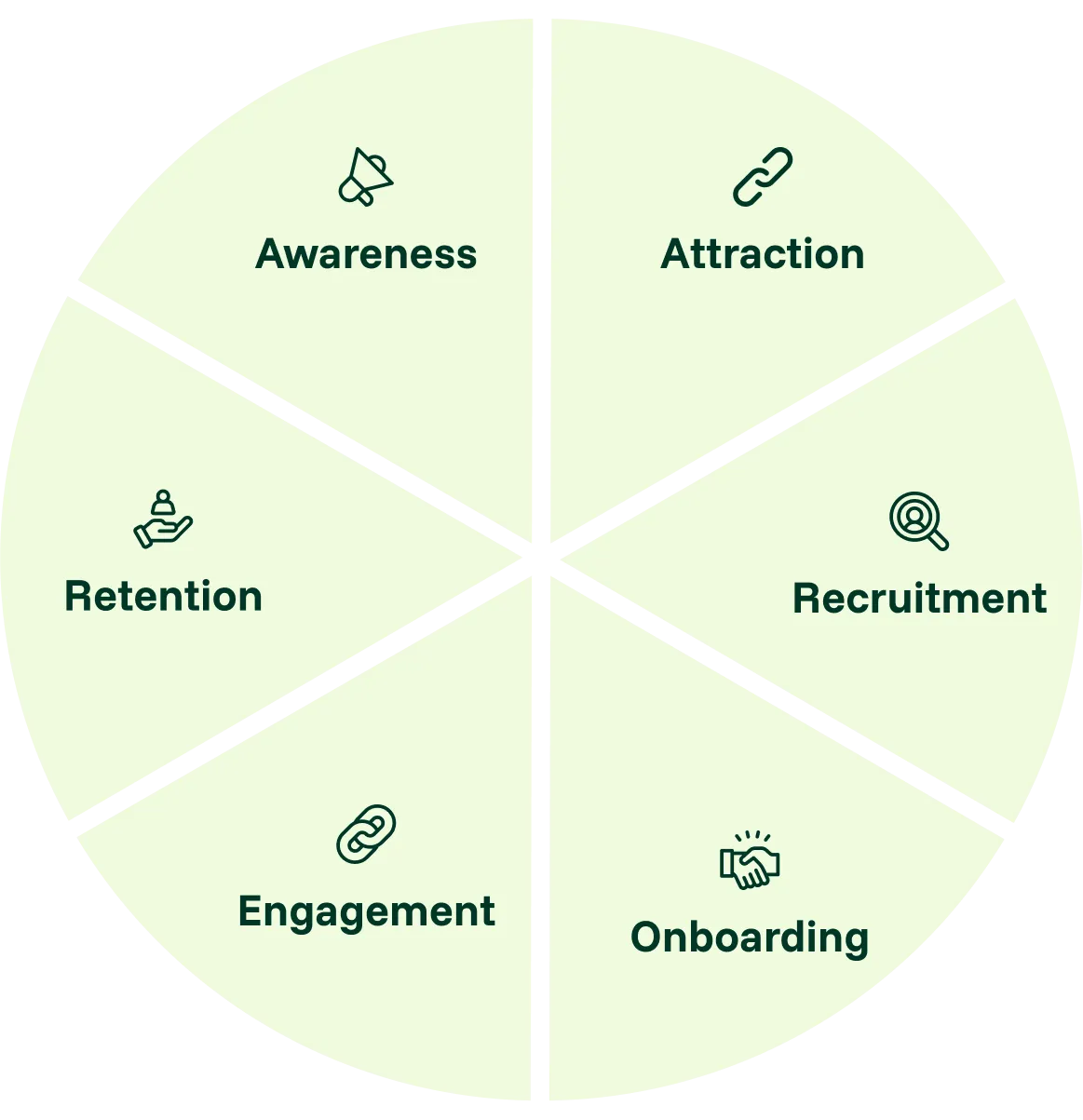
Awareness
Young people are aware that opportunities exist, through channels that feel familiar and relevant. This is about visibility: showing up where young people already are and sparking interest.
Explore AwarenessAttraction
Young people feel drawn to the opportunity because it speaks to their interests, values, or goals. This is about making the opportunity feel relevant, genuine, and made for them.
Explore AttractionRecruitment
Young people can easily find, understand, and take the steps needed to get involved. This is about a process that is clear, accessible, and free from unnecessary barriers.
Explore RecruitmentOnboarding
Young people are welcomed, supported, and set up to succeed from day one. This is about building confidence and giving them everything they need to start well.
Explore OnboardingEngagement
Young people stay connected and step into leadership, mentorship, or new roles. This is about supporting long-term involvement, growth, and strong transitions when the time comes.
Explore EngagementRetention
Young people feel valued and motivated to keep showing up. This is about creating space for learning, contribution, and real ownership of the work.
Explore RetentionScore your own practice.
Pick the stage you want to test. Rate your organisation from one to five on seven statements and you will get a score out of thirty-five, with what it means and where to go next.