.svg)
What is it?
Onboarding is about building confidence, relationships, and trust. The first few days in a role can shape whether a young person feels like they truly belong, or like they're on the outside looking in.
For many, joining your organisation is their first experience of structured work or leadership, which means the first few days carry a weight they'll never carry again.
Organisations that invest in strong onboarding unlock long-term engagement. Those who start well are more likely to take initiative, grow into leadership, and become people who champion the work.
Common challenges
What barriers do organisations face at this stage?
For many young people, this role is their first experience of structured work, which means the challenge isn't just learning tasks but decoding everything around them. Many organisations describe young people arriving without expectations, and unsure what to do or ask.
Young people facing disadvantage bring complexity, from unstable life situations to past experiences that make it hard to believe they can be themselves at work. Many organisations describe needing to build trust case by case, and offering young people the chance to pause and reconnect rather than pushing through.
Buddy and mentor structures assume there's someone suitable to pair a young person with, which small organisations often don't have. Many organisations describe running informal, ad hoc onboarding because there simply aren't enough staff to build the support structures they know young people need.
What we heard
Verbatim from Community of Practice members during the Awareness session.
"It may be their first ever job, and that's a challenge in itself - understanding office etiquette, what to do, the sense of unknown."
Community of Practice member
"The barrier is navigating the complexity that comes with disadvantage, and balancing work responsibilities with life situations."
Community of Practice member
"There's a lack of understanding of how a person can be their true self. A person needs to believe it, based on their past experiences."
Community of Practice member
"Finding someone suitable to pair them with is extremely difficult with small amounts of staff available."
Community of Practice member
Guiding insights
What patterns emerged across every organisation we spoke to? Hover or tap any card for the insight behind it.
Young people stay engaged when they feel prepared, not rushed, because early experiences shape their sense of capability. Being handed a task on day one without context doesn't feel empowering — it triggers self-doubt.
Young people arrive with different levels of experience, confidence, and support behind them. Assuming a shared baseline excludes those who need more structure. Some are ready to lead immediately, while others need to observe and practise before stepping forward.
A single trusted point of contact is what makes young people willing to ask questions, admit uncertainty, and stay engaged when things get hard. Without that anchor, small uncertainties compound into disengagement.
When roles, timelines, and norms are assumed rather than explained, young people are left guessing what good looks like. Clarity, even about simple logistics like where to go and what to wear, frees them to focus on contributing rather than decoding.
Early experiences have a lasting impact on whether a young person feels motivated, included, and ready to take initiative. A strong start compounds into leadership and advocacy, while a shaky one is hard to recover from.
Strategy Playbook
Nine strategies across three themes. Pick a theme, then open any strategy for a worked example.
A visible, predictable presence in the handful of spaces young people already spend time, online and offline, rather than broad coverage nobody notices.
Identify the one platform young people spend time on, and commit your effort instead of choosing every channel.
Find one upcoming event where young people already gather, such as a careers fair, expo, or festival, and offer an interactive activity.
Commit to a publishing schedule you can actually sustain, and hold it long enough for familiarity and trust to build.
Communication that sounds like a person, shows the real work in progress, and lets young people hear about the experience in a peer's voice rather than the organisation's.
Before publishing, read it aloud. Cut any word you would never say in conversation to someone in front of you.
Document the journey of your work, including the challenges, unexpected moments, and how young people have shaped it.
Bring in a young person who already makes content to produce fun, entertaining videos.
A living space young people return to between opportunities, with real ownership over what gets made and shared, so engagement outlasts any single program or post.
Create a moderated space where young people can talk between events, and seed it with content that gives them a reason to return.
Hand a young person or small group control of your social media, with a brief and payment for their time.
Find young people already enthusiastic about your work, and equip them to share opportunities in their own voice.
Reference Panels
Two tables that apply across stages rather than only to Awareness.
Incentives are not only financial. These five types cover what young people told us made an opportunity worth their time. Select one, or compare all five side by side.
Direct payment for time and contribution, through stipends, honorariums, gift cards, or award-wage roles.
It tells young people their expertise has real-world value, and removes one of the most common reasons they say no.
- Provide honorariums or gift cards to value youth time and skills.
- Offer award-wage roles to encourage sustained engagement and responsibility.
- Give flexible micro-grants that youth control to empower ownership.
Tangible professional experience in the opportunity itself, through paid roles, internships, or portfolios.
It gives young people proof of experience they can point to long after the work is done.
- Write reference letters and endorsements to validate contributions.
- Provide paid internships and project roles for real-world experience.
- Support youth to turn their job tasks into a career portfolio that showcases their achievements.
Skill-building and personal growth, through workshops, certifications, or mentoring relationships.
It makes the role valuable in itself, because every shift builds a skill they keep.
- Offer targeted workshops that help youth build new skills.
- Provide online courses and certifications to support continuous learning.
- Pair youth with mentors for guidance, growth, and confidence-building.
- Use reverse mentoring to elevate youth voices in trainings.
Formal acknowledgement of their contribution, through credits, references, or ceremonies.
It tells young people their work mattered and that someone is paying attention.
- Credit youth publicly on publications and social media.
- Host thank you events and award ceremonies.
Access to people and networks, through peer connections, introductions, and projects.
It gives young people a community to belong to and connections that outlast the role.
- Host peer networking events to facilitate connections.
- Connect youth with industry professionals and experts.
- Include youth in real projects to encourage collaboration with professionals.
- Organise community co-creation days to co-design programs.
Direct payment for time and contribution, through stipends, honorariums, gift cards, or award-wage roles.
Tangible professional experience in the opportunity itself, through paid roles, internships, or portfolios.
Skill-building and personal growth, through workshops, certifications, or mentoring relationships.
Formal acknowledgement of their contribution, through credits, references, or ceremonies.
Access to people and networks, through peer connections, introductions, and projects.
It tells young people their expertise has real-world value, and removes one of the most common reasons they say no.
It gives young people proof of experience they can point to long after the work is done.
It makes the role valuable in itself, because every shift builds a skill they keep.
It tells young people their work mattered and that someone is paying attention.
It gives young people a community to belong to and connections that outlast the role.
- Provide honorariums or gift cards to value youth time and skills.
- Offer award-wage roles to encourage sustained engagement and responsibility.
- Give flexible micro-grants that youth control to empower ownership.
- Write reference letters and endorsements to validate contributions.
- Provide paid internships and project roles for real-world experience.
- Support youth to turn their job tasks into a career portfolio that showcases their achievements.
- Offer targeted workshops that help youth build new skills.
- Provide online courses and certifications to support continuous learning.
- Pair youth with mentors for guidance, growth, and confidence-building.
- Use reverse mentoring to elevate youth voices in trainings.
- Credit youth publicly on publications and social media.
- Host thank you events and award ceremonies to celebrate milestones.
- Lead legacy projects or spaces to carry forward youth contributions long-term.
- Host peer networking events to facilitate connections.
- Connect youth with industry professionals and experts.
- Include youth in real projects to encourage collaboration with professionals.
- Organise community co-creation days to co-design programs.
Incentives are not only financial. These five types cover what young people told us made an opportunity worth their time. Select one, or compare all five side by side.
Another young person at a similar stage
Shared experience, encouragement without authority
To feel understood by someone who gets it, and less alone in the struggle
Often, and informal
A friendly colleague, close in age or stage
Answers questions, gives a tour, helps them feel included
To get familiar, slowly settle in, and ask questions without pressure
Daily, in the first weeks
A more experienced colleague, not their manager
Offers advice on handling workplace situations, projects, decisions, and culture
To build their confidence over time and navigate challenges
Periodically, over time
An internal or external coach or supervisor
Helps them reflect, build skills, track progress, and improve in an area of work
To build a particular skill, such as speaking up or leading tasks, or work toward a goal
Scheduled, regular sessions
Another young person at a similar stage
A friendly colleague, close in age or stage
A more experienced colleague who is not their manager
An internal or external coach or supervisor
Shared experience and encouragement, without authority
Answers questions, gives a tour, and helps them feel included
Offers advice on workplace situations, projects, decisions, and organisational culture
Helps them reflect, build skills, track progress, and improve in a specific area of work
When they want to feel understood by someone who gets it and feel less alone in the struggle
When they are getting familiar with a new environment, settling in, and asking questions without pressure
When they want to build confidence over time and navigate challenges
When they want to build a particular skill, such as speaking up or leading tasks, or work towards a specific goal
Often and informally
Daily during the first few weeks
Periodically over time
Scheduled, regular sessions
Ripple Opportunities
SYDNEY // NEW SOUTH WALES
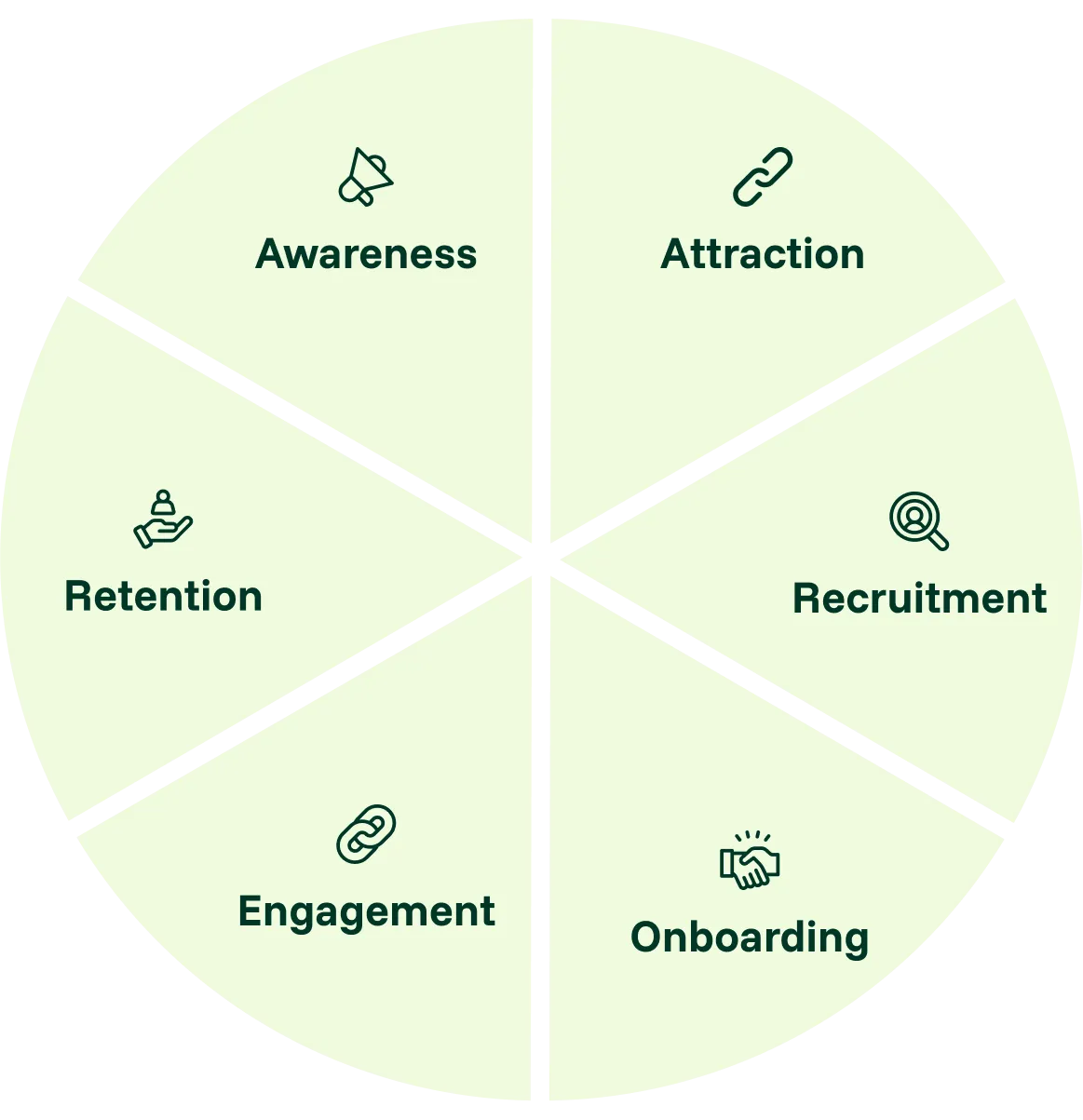
This case study is part of the Youth Engagement Playbook. Download the full playbook to explore all six stages of youth engagement and take the self-assess
Onboarding at All Things Equal is about more than paperwork. It’s about making young people with a disability feel confident, supported, and ready to succeed. From the very first contact, each trainee is guided through a structured process that builds skills and independence.
ATE’s journey begins with an initial phone consultation, giving trainees a safe space to ask questions and learn about the role. This is followed by a one-on-one meeting at the café, where they meet staff and explore the workplace environment. A short trial experience allows them to try tasks firsthand before officially joining. Then, trainees create a personalised profile capturing their skills, learning goals, and support needs.
During the 12-month Pre-Employment Program, trainees build foundational skills in customer service, food preparation, and teamwork. They receive on-the-job coaching, supported by a dedicated upskilling team, and participate in regular check-ins to review progress and address challenges.
Upon completion, trainees step into the Employment Program with award-wage roles in the café and catering business. They are paired with mentors or buddies to guide them through daily tasks and social integration. Personalised resources help trainees navigate the workplace with clarity. These include:
- Visual menus with photos of items, ingredients, and sides.
- Step-by-step photos for complex tasks, like making a kids’ milkshake, showing every action from pouring milk to placing the straw.
- Shift schedules with visual cues, detailing arrival, uniform preparation, clock-in times, and start of work.
Where do you stand on Onboarding?
Now it's your turn. Take an honest look at how your organisation is doing on [stage]. Rate each statement from one to five, and you'll see exactly where to start."
Download The Nine Strategies
A one page summary you can bring to a team meeting, with the worked examples and the self-assessment.
All nine strategies across Channels, Messaging & Community Building
The worked example for each one
The Social Media 101 format table
The seven statement self-assessment, printable