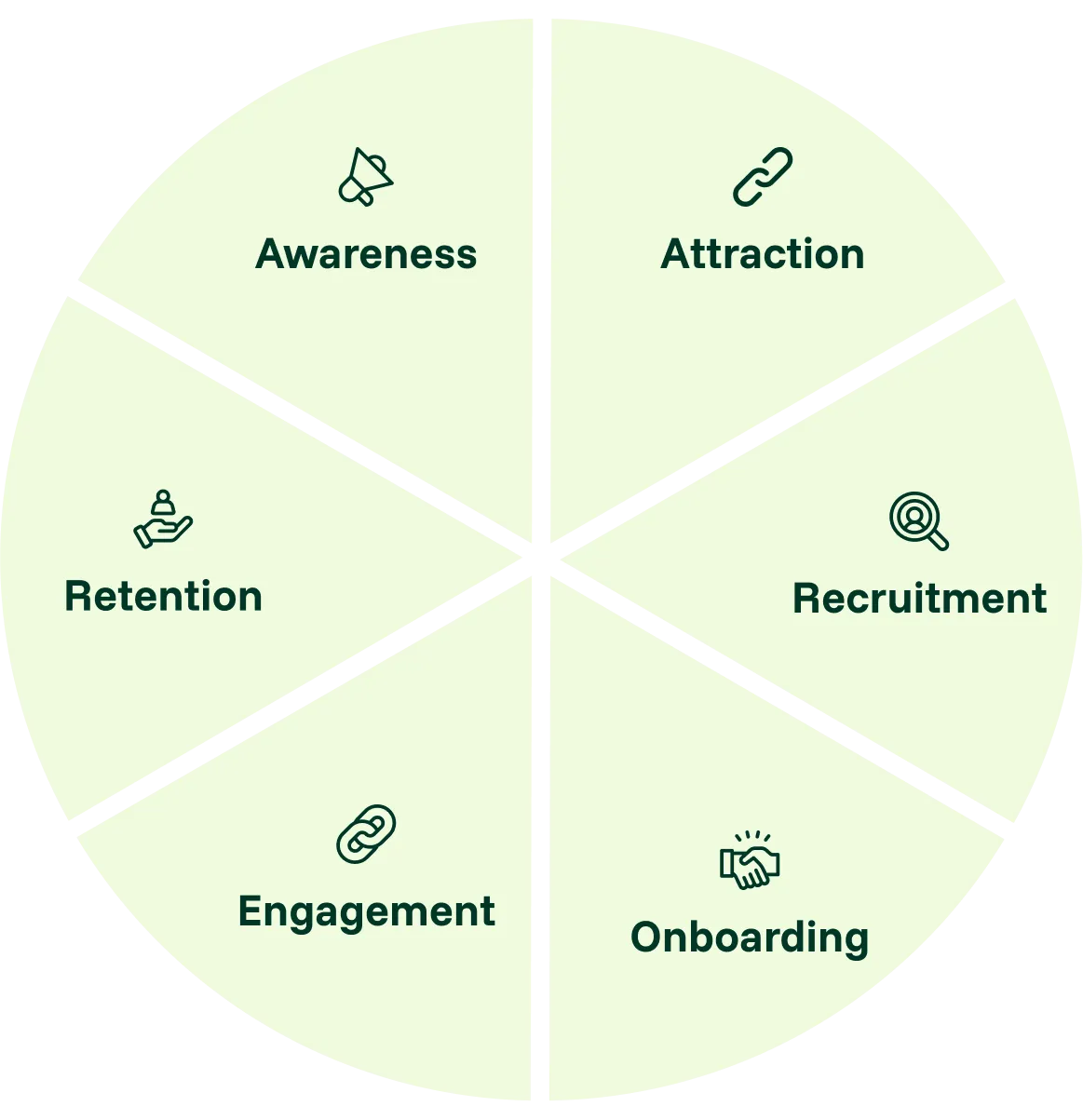
What is it?
Attraction is when a young person moves from knowing something exists to genuinely considering whether it's for them.
For many young people, they’re vetting the opportunity and deciding if it feels worth saying yes to. Opportunities that aren't clearly relevant to their lives, that feel designed for someone else, or that ask too much before offering anything back, are quietly passed over.
Organisations that get this right create the conditions for young people to see themselves in what's being offered, and in doing so, lay the foundation for engagement that actually lasts.
Common challenges
What barriers do organisations face at this stage?
Organisations often have to choose between reaching many young people and reaching the right ones, and few channels bridge the two. Many organisations describe reaching wide audiences, but struggling to attract young people who are the right fit for the opportunity.
Organisations know their own mission fluently but struggle to translate it into terms that make a young person feel the opportunity is for them. Many organisations describe leading with their program or organisational story, and find that only young people already familiar with the space respond.
Organisations know they should pay young people for expert contributions, but there are no clean benchmarks for what fair looks like across sectors and types of engagement. Many organisations default to unpaid volunteer framings, ad-hoc gift cards, or rates borrowed from other roles that don't quite fit the work being asked.
What we heard
Verbatim from Community of Practice members during the Awareness session.
"We have young people reach out to volunteer, but they have a lot on their plate already with other commitments, so it can be hard to engage them."
Community of Practice member
"How do you put a price or compensation on someone's personal story? We're in constant conversation with young people around what feels appropriate for each opportunity."
Community of Practice member
“Our challenge is we have young people thinking, 'What has it got to do with my life?'”
Community of Practice member
Guiding insights
What patterns emerged across every organisation we spoke to? Hover or tap any card for the insight behind it.
Young people who contribute lived experience are doing expert work, and unpaid contributions send a clear signal about how much that work is actually valued. Meaningful compensation establishes trust before the relationship has even begun.
Highly Personal
A single payment method doesn't work for every young person. Some are on benefits, some lack easy access to banking, and some simply prefer different options. Offering a choice signals that you have thought about their individual circumstances.
Empty Promises
Young people accept constraints, but they don't accept being misled about them. Whether it's honesty about payment, timelines, or long-term outcomes, being upfront about what you can and can't offer builds more trust than pretending.
Young people engage more consistently when the space feels comfortable, low-pressure, and considered. Flexible seating, sensory-friendly options, food, and the freedom to ease in gradually tell a young person more about belonging than any spoken welcome.
Young people are not drawn in by how exciting an opportunity sounds, but by how clearly it connects to something they care about. Organisations that lead with this will attract young people who are intrinsically motivated and more likely to stay.
Types of Incentives
Discover the different types of incentives that attract young people. Money matters, but it’s
only one of five ways to make an opportunity worth their time.
Direct payment for time and contribution, through stipends, honorariums, gift cards, or award-wage roles.
It tells young people their expertise has real-world value, and removes one of the most common reasons they say no.
- Provide honorariums or gift cards to value youth time and skills.
- Offer award-wage roles to encourage sustained engagement and responsibility.
- Give flexible micro-grants that youth control to empower ownership.
Tangible professional experience in the opportunity itself, through paid roles, internships, or portfolios.
It gives young people proof of experience they can point to long after the work is done.
- Write reference letters and endorsements to validate contributions.
- Provide paid internships and project roles for real-world experience.
- Support youth to turn their job tasks into a career portfolio that showcases their achievements.
Skill-building and personal growth, through workshops, certifications, or mentoring relationships.
It makes the role valuable in itself, because every shift builds a skill they keep.
- Offer targeted workshops that help youth build new skills.
- Provide online courses and certifications to support continuous learning.
- Pair youth with mentors for guidance, growth, and confidence-building.
- Use reverse mentoring to elevate youth voices in trainings.
Formal acknowledgement of their contribution, through credits, references, or ceremonies.
It tells young people their work mattered and that someone is paying attention.
- Credit youth publicly on publications and social media.
- Host thank you events and award ceremonies.
Access to people and networks, through peer connections, introductions, and projects.
It gives young people a community to belong to and connections that outlast the role.
- Host peer networking events to facilitate connections.
- Connect youth with industry professionals and experts.
- Include youth in real projects to encourage collaboration with professionals.
- Organise community co-creation days to co-design programs.
Direct payment for time and contribution, through stipends, honorariums, gift cards, or award-wage roles.
Tangible professional experience in the opportunity itself, through paid roles, internships, or portfolios.
Skill-building and personal growth, through workshops, certifications, or mentoring relationships.
Formal acknowledgement of their contribution, through credits, references, or ceremonies.
Access to people and networks, through peer connections, introductions, and projects.
It tells young people their expertise has real-world value, and removes one of the most common reasons they say no.
It gives young people proof of experience they can point to long after the work is done.
It makes the role valuable in itself, because every shift builds a skill they keep.
It tells young people their work mattered and that someone is paying attention.
It gives young people a community to belong to and connections that outlast the role.
- Provide honorariums or gift cards to value youth time and skills.
- Offer award-wage roles to encourage sustained engagement and responsibility.
- Give flexible micro-grants that youth control to empower ownership.
- Write reference letters and endorsements to validate contributions.
- Provide paid internships and project roles for real-world experience.
- Support youth to turn their job tasks into a career portfolio that showcases their achievements.
- Offer targeted workshops that help youth build new skills.
- Provide online courses and certifications to support continuous learning.
- Pair youth with mentors for guidance, growth, and confidence-building.
- Use reverse mentoring to elevate youth voices in trainings.
- Credit youth publicly on publications and social media.
- Host thank you events and award ceremonies to celebrate milestones.
- Lead legacy projects or spaces to carry forward youth contributions long-term.
- Host peer networking events to facilitate connections.
- Connect youth with industry professionals and experts.
- Include youth in real projects to encourage collaboration with professionals.
- Organise community co-creation days to co-design programs.
Accountable Futures Collective
REDFERN // NEW SOUTH WALES
This case study is part of the Youth Engagement Playbook. Download the full playbook to explore all six stages of youth engagement and take the self-assessment.
Accountable Futures Collective (AFC) has created a transformative model that gives young people meaningful work, influence, and real incentives.
At its core, AFC has a dual governance structure. Young people sit on an Impact Board, guiding strategy, youth engagement, and program design, while adults sit on an Integrity Board, overseeing legal, financial, and risk responsibilities.
Together, this forms a joint Intergenerational Board, in which youth hold genuine authority, shaping real decisions and organisational direction. This model provides meaningful work, where youth are trusted with responsibilities that have real consequences for the organisation’s impact.
Beyond governance, AFC have built a strong community of young people who stay connected, support each other, and are invited to contribute over time. This allows young people to choose their level of involvement and participate in wide-ranging opportunities that match their interests, skills, and goals.
Young people can participate through multiple touchpoints:
- Learning sessions – unpaid opportunities to build knowledge and skills together. Topics are co-designed, allowing participants to teach or learn in ways that matter to them.
- Collaborating sessions – paid opportunities to actively lead or contribute to projects, using their skills and passions to make real impact.
- Connecting sessions – unpaid, casual sessions for community, fun, and social connection, where youth help shape activities and themes.
By combining unique governance, genuine influence, and flexible participation, AFC attracts young people into lasting engagement. Youth feel valued, included, and empowered in shaping the organisation and the wider systems it seeks to improve.
Where do you stand on Attraction?
Now it's your turn. Take an honest look at how your organisation is doing on [stage]. Rate each statement from one to five, and you'll see exactly where to start."
Download The Nine Strategies
A one page summary you can bring to a team meeting, with the worked examples and the self-assessment.
All nine strategies across Channels, Messaging & Community Building
The worked example for each one
The Social Media 101 format table
The seven statement self-assessment, printable